If you’re a dog owner, you’ve likely heard about the importance of mental stimulation. A bored dog is often a destructive or anxious dog. This has led many to look for online solutions, and one name that frequently comes up is Adrienne Farricelli’s “Brain Training for Dogs.”
But with so many training programs available, it’s natural to be curious about what’s actually inside. Is it just a collection of simple tricks, or is it a structured program that can genuinely help with behavior issues?
This article provides a clear and detailed breakdown of the Brain Training for Dogs program. We’ll walk through its core philosophy, the structure of the course, the types of games you’ll find inside, and who might benefit most fom this approach.

A Look Inside: Course Structure and Key Concepts
The program is designed to be more than just a list of commands; it’s a complete system for engaging your dog’s mind. Here’s a look at its foundational elements.
1. The Training Philosophy: Force-Free and Science-Based
At its core, Brain Training for Dogs uses a positive reinforcement and force-free methodology. This is a modern, science-backed approach that has become the gold standard for professional trainers worldwide.
- What it means: You won’t find any recommendations for punishment, intimidation, or dominance-based tools (like prong or shock collars).
- The science: The course is built on the concept of neuroplasticity—the brain’s ability to form new habits and behaviors. By creating fun and engaging learning experiences, the program helps your dog build new, more positive neural pathways.
2. The ‘School for Dogs’ Format: From Preschool to Einstein
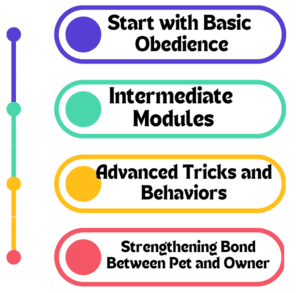
One of the most helpful features is its progressive structure. The course is organized into seven distinct modules, much like a school curriculum. This format prevents you from feeling overwhelmed and ensures your dog masters foundational skills before moving on to more complex tasks.
Here is a simple overview of the modules:
| Module Name | Key Skill Developed |
|---|---|
| Preschool | Foundational skills & building focus |
| Elementary School | Improving obedience & completing commands |
| High School | Developing patience & impulse control |
| College | Enhancing motor skills & concentration |
| University | Improving tolerance of others & impulse control |
| Graduation | Advancing obedience & intelligence |
| Einstein (Genius) | Mastering advanced tricks & skills |
3. What You’ll Actually Be Doing: Games and Puzzles
Instead of repetitive drills, the training is delivered through a series of simple games. These games are designed to be fun for your dog while strategically targeting specific problem areas.
Here are a few examples of what you’ll find inside:
- The “Treasure Hunt” Game: This simple game from the early modules teaches your dog to use its nose and helps relieve boredom. It’s a perfect way to burn off mental energy on a rainy day.
- The “Muffin Game”: Using a simple muffin tin and some tennis balls, this game challenges your dog to figure out where a treat is hidden. It’s excellent for building problem-solving skills.
- The “Bottle Game”: This more advanced game involves your dog learning to tip over a bottle to get treats out. It’s designed to improve patience and dexterity.

Who Is This Program For?
Understanding who benefits most from a training style is crucial. Brain Training for Dogs is particularly well-suited for:
- Owners who want to build a stronger bond with their dog: The game-based approach makes training feel like playtime, strengthening your relationship.
- People with dogs who are bored or have excess energy: The mental challenges are a fantastic way to tire out a dog without needing a huge yard.
- Owners who are new to force-free training: The instructions are clear, simple, and provide a great introduction to positive reinforcement methods.
- Anyone looking to solve common behavior issues: The course includes extensive archives and bonus materials that address problems like barking, chewing, and leash pulling.
What Else Is Included in the Program?
Beyond the seven core modules, the program comes with several valuable extras:
- Obedience 101: A bonus section that covers essential commands like “sit,” “stay,” “down,” and “heel” using the same force-free philosophy.
- Adrienne’s Archive: A vast library of articles and training guides written by Adrienne Farricelli to address dozens of specific behavior problems, from whining to jumping.
- Private Forum Access: A dedicated community where you can ask questions and share experiences with other dog owners who are going through the course.
Final Thoughts
Brain Training for Dogs offers a structured, easy-to-follow program for owners who want to engage their dog’s mind and solve behavior problems using positive, science-based methods. Its game-based format makes the process enjoyable for both human and canine.
By focusing on mental stimulation, it provides a powerful tool for building a well-behaved, confident, and happy dog.